
Who Is Liable If You Slip and Fall While Holiday Shopping?
Liability follows control. After a slip and fall while holiday shopping in West Virginia, responsibility usually rests with whoever controlled the spot: the store, the mall owner, a snow removal contractor, or the city in charge of the sidewalk. The test is whether that party knew or should have known about the hazard and failed to fix it or warn.
November and December stack the odds. Stores run longer hours and pile merchandise higher than the shelves were built for, entry mats are soaked by midafternoon, and a freeze can glaze a parking lot in Fayetteville or Princeton between the morning plow and the evening rush. For a grandparent out buying gifts, one misstep can mean a broken hip and months of rehabilitation.
What Duty Does a West Virginia Store Owe Holiday Shoppers?
Every lawful customer in a West Virginia store is owed a duty of reasonable care under the circumstances. In Mallet v. Pickens, the Supreme Court of Appeals of West Virginia did away with the old invitee and licensee categories, leaving one question: did the business act reasonably given the crowds, the season, and the risk?
Before the 1999 decision abolishing those categories, the protection a visitor received depended on whether a court labeled them an invited customer or merely a guest. Now the shopper in the toy aisle and the friend along for the ride stand on equal footing. Only trespassers fall outside the rule.
Juries measure reasonable care against five considerations: how foreseeable the injury was, how severe it could be, the time, manner, and circumstances of the visit, the normal or expected use of the area, and the burden prevention would have placed on the business. In December, those factors tilt toward the shopper. A retailer advertising door-buster sales knows crowds are coming and knows customers will be reading price tags, not scanning the floor.
Does the Store Have to Know About the Hazard Before You Fall?
Usually, yes. A West Virginia business is generally responsible for a hazard only if an employee knew about it or it had been there long enough that a reasonable inspection would have found it. A spill alone does not prove negligence, which is why the time a hazard sat there so often decides the case.
Actual knowledge is straightforward: a cashier saw the broken jar, or another shopper reported the puddle by the coolers. Constructive knowledge means the store should have known. Footprints dried into a spill or a box parked in the same aisle since morning suggest time passed and nobody looked. Hazards the store created itself, like a stocking cart abandoned mid-aisle or a display cord stretched across a walkway, largely answer the knowledge question on their own.
Staffing records tell their own story. Sweep logs and inspection schedules tend to be the first casualty when a short-handed store has checkout lines reaching the back wall, and a gap of several hours in a store’s own records can be persuasive proof that no reasonable inspection took place.
Can a Store Avoid Liability by Calling the Hazard “Open and Obvious”?
Stores often invoke the open and obvious defense in W. Va. Code § 55-7-28, which removes any duty to protect against dangers that are open, obvious, or equally known to the shopper. Whether a particular hazard was truly obvious, though, is usually a question of fact for a jury, especially when crowds or displays concealed it.
The Supreme Court of Appeals set the doctrine aside in 2013 in Hersh v. E-T Enterprises, and in 2015 the Legislature answered with the open and obvious statute, restoring the rule as it stood before that ruling. Defense lawyers usually raise it early, asking a judge to end the case before a jury hears it.
The defense reaches less far than insurers suggest. In a 2022 decision involving a fall at a cemetery, the court held that the doctrine applies only where there is evidence the owner knew of the danger, and that a visitor’s sworn account that no hazard was visible kept the case alive. Holiday crowds produce exactly those facts: a spill hidden beneath a line of shoppers, or a warning cone tucked behind a pallet of gift sets.
Who Is Responsible for Ice and Snow in a Store Parking Lot?
Whoever controls and maintains a parking lot usually bears responsibility for its ice, whether that is the store, the shopping center owner, or a hired snow removal contractor. West Virginia judges ice and snow cases by the same reasonable-care standard, although stores commonly argue that visible ice was an obvious hazard.
Southern West Virginia winters create the conditions: snow melts in afternoon sun and refreezes after dark, shaded corners stay slick, and every customer tracks slush onto the entry tile. A freestanding store may maintain its own lot, while a shopping center tenant usually leaves the lot and walkways to the center’s owner, who often hires a snow removal contractor. At a center like the Mercer Mall in Bluefield, the stores, walkways, and lot may each fall under a different arrangement.
The obvious-ice argument weakens when the ice was clear, when it formed on a spot the owner had already treated and left looking safe, or when the only route to the door crossed it. Weather records and the contractor’s service logs frequently reveal whether the promised work was ever done.
Who Besides the Store Can Be Liable for a Holiday Shopping Fall?
A mall owner, property manager, cleaning or snow removal contractor, display vendor, or local government may share responsibility with the store. Under W. Va. Code § 55-7-13c, each defendant generally pays only its own percentage of fault, so finding every responsible party early can directly affect how much of the loss is recovered.
A hypothetical shows why. Outside a narrow exception for parties that conspire to cause harm, West Virginia’s several liability rule works like this: if a jury finds the store 40 percent responsible and the snow contractor 60 percent responsible, a shopper who sued only the store generally collects only the store’s share. The incident report, the lease, and the service contracts reveal who else belongs in the case.
Defendants can also point at people the shopper never sued. The nonparty fault statute lets a store file a notice within 180 days after being served naming anyone else it blames, and the jury may then assign that absent party a percentage of fault. Every point placed on the nonparty comes off the shopper’s recovery.
What If You Fall on a Public Sidewalk Outside the Store?
A city, town, or county can be liable for a fall caused by its negligent failure to keep a public sidewalk in repair or free from hazards, under W. Va. Code § 29-12A-4(c)(3). Claims against local governments come with their own immunities and procedures, so knowing who owns the exact spot matters.
Small-town shopping often happens on public sidewalks, like those near the courthouse on Court Street in Fayetteville or through downtown Hinton and Welch. Heaved concrete or a downspout that sends water across the walk to freeze overnight can support a claim under West Virginia’s governmental tort claims law, but whether a stretch is public, private, or shared can hinge on property lines and local ordinances.
Which Holiday Shopping Hazards Cause the Most Falls?
Most holiday falls trace back to conditions that multiply in November and December: more merchandise than shelf space, floors wet from tracked-in snow, thinner staffing across longer hours, and crowds that hide hazards underfoot. Every one of those conditions is foreseeable to a retailer, so the care a store owes rises with the season.
A record 202.9 million people shopped over Thanksgiving weekend 2025, according to the National Retail Federation, and 129.5 million of them went to physical stores. Hazards that turn up again and again include:
- Overstocked merchandise: Boxes balanced on top fixtures and heavy items stored high can drop onto shoppers or into their path.
- Carts and pallets in aisles: Restocking during business hours leaves shin-high obstacles in crowded aisles.
- Soaked or bunched entry mats: A saturated mat or a curled edge turns the entryway into the most dangerous spot in the building.
- Spills and food samples: Sample stations and coffee counters put liquid on smooth floors that crowds keep anyone from seeing.
- Display cords: Extension cords feeding lighted trees often cross walkways under dimmed lighting.
- Door-buster crowd surges: Federal workplace safety officials publish crowd management safety guidelines for retailers calling for barriers, added staff, controlled entry, and clear exits during major sales events.
- Dark or uncleared parking areas: Short winter days send many shoppers back to their cars after dark, when ice and curbs are hardest to see.
How Do Medicare and Medicaid Affect a Fall Recovery for an Older Shopper?
Medicare and West Virginia Medicaid each have a right to be repaid from a recovery when they paid for treatment after a store fall. Federal law, 42 U.S.C. § 1395y(b)(2), makes Medicare’s payments conditional, and W. Va. Code § 9-5-11 gives the state Medicaid program a priority lien on recovered medical expenses.
The stakes run higher for older shoppers. According to the Centers for Disease Control and Prevention, more than 14 million adults age 65 and older, about one in four, report falling each year; falls are the leading cause of injury in that age group, and the age-adjusted fall death rate for older adults rose 21 percent between 2018 and 2024. Under the federal Medicare Secondary Payer rules, whatever Medicare paid must be identified, verified, and resolved before settlement money is distributed, and each listed charge deserves a check against the treatment actually tied to the fall.
The state’s Medicaid recovery statute generally requires the recipient to notify the program of the claim and of any settlement and to hold the lien amount in escrow, though settlements of $20,000 or less that fully resolve the claim are exempt. A recovery can also affect future Medicaid eligibility, particularly for a shopper who receives or expects to need long-term care benefits. Coordinating the injury claim with Medicaid planning and asset protection helps keep a settlement from undoing years of careful preparation.
What Evidence Proves the Store Was Responsible for Your Fall?
Strong proof typically includes store surveillance video, photographs of the hazard and its surroundings, the store’s incident report, inspection or sweep logs, witness names, the shoes worn, receipts showing the time of the visit, and prompt medical records. Because video is often recorded over quickly, a written preservation demand matters.
A preservation letter to the store, the property owner, and any contractor warns them that litigation is possible. In a 2003 decision on destroyed evidence, the Supreme Court of Appeals recognized intentional spoliation as a separate claim and confirmed that when a party loses evidence it should have kept, a court may tell the jury the missing evidence would have hurt that party.
Timing shapes the value of nearly everything else. A phone photo taken before an employee mops the hazard captures it better than any later description, witnesses who do not work for the store have no stake in its defense, and a gap between the fall and the first doctor visit is one of the first things an insurer points to.
What Compensation Can You Recover After a Fall in a Store?
Recoverable losses for an injured West Virginia shopper may include medical expenses, future treatment costs, lost wages, reduced earning ability, and compensation for pain, suffering, and lost enjoyment of life. The amount depends on how severe the injury is, how clear the store’s fault is, any shared fault, and any liens owed from the recovery.
An older shopper’s losses rarely look like a working adult’s. A retiree may have no paycheck to lose, yet a broken hip can end the ability to live alone or pull a son or daughter away from work to provide care. Early settlement offers seldom reflect that picture, and accepting one usually means signing a release that ends the claim for good.
How Long Do You Have to File a Claim After a Slip and Fall While Holiday Shopping in West Virginia?
A West Virginia slip and fall lawsuit generally has to be filed within two years of the injury under W. Va. Code § 55-2-12. Miss that deadline, and the claim is usually barred entirely, however clear the store’s fault or serious the injury. The personal injury limitations statute runs from the date of the injury, putting the deadline for a holiday fall in the middle of a later holiday season. Negotiations with an insurer generally do not pause the clock.
Smaller claims can go to magistrate court, which has a cap on the civil claims it can hear. Larger ones typically go to the circuit court in the county where the fall happened, such as the Fayette County Circuit Court or the Mercer County Circuit Court, with appeals generally heard by the Intermediate Court of Appeals of West Virginia.
How Can Hewitt Law Help After a Slip and Fall While Holiday Shopping in West Virginia?
From its office in Fayetteville, Hewitt Law handles fall claims for shoppers and their families from Boone County down to McDowell County. The firm works out who controlled the spot where the fall happened, moves quickly to preserve video and records, and builds the claim around the injury’s full effect on the person’s life.
Because the firm’s elder law practice centers on Medicaid planning and long-term care, the repayment and eligibility questions that follow an older shopper’s injury can be handled alongside the claim itself. If you or a family member was hurt in a slip and fall while holiday shopping in West Virginia, contact the firm to talk through what happened.
Frequently Asked Questions
Should you fill out the store’s incident report before leaving?
In most cases, yes, as long as it stays short and factual. Note where you fell and what was on the floor, skip guesses about fault or assurances that you are fine, and ask for a copy or a photo of the finished form.
What should you say when the store’s insurance adjuster calls?
As little as possible until you understand your injury. Giving your contact information while declining a recorded interview for now is reasonable, because the risks of giving a recorded statement to an insurance company apply to a store’s insurer just as they do after a car crash.
Does a “wet floor” sign protect the store from liability?
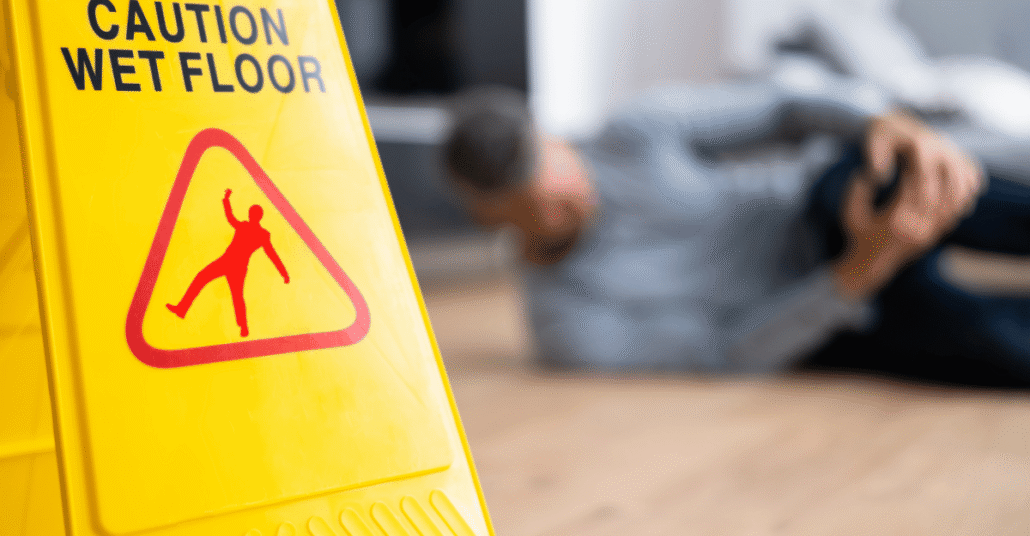
Not automatically. A sign helps only if shoppers could see it, it matched the actual hazard, and it came with a reasonable effort to clean up. A sign left for hours beside a spill nobody mopped may show the store knew about the danger and still failed to fix it.
Can you bring a claim for an elderly parent who fell while shopping?
Often, yes. An adult child named as agent under a valid financial power of attorney can usually manage the paperwork and communications on the parent’s behalf. If the fall leads to the parent’s death, the claim may continue as a wrongful death action brought through the estate.
What if the pain did not start until the day after the fall?
Delayed symptoms are common, especially with head and back injuries that adrenaline hides in the moment. See a doctor once the pain appears and explain exactly how and where you fell, so the medical record ties the injury to the store visit.


Leave a Reply
Want to join the discussion?Feel free to contribute!